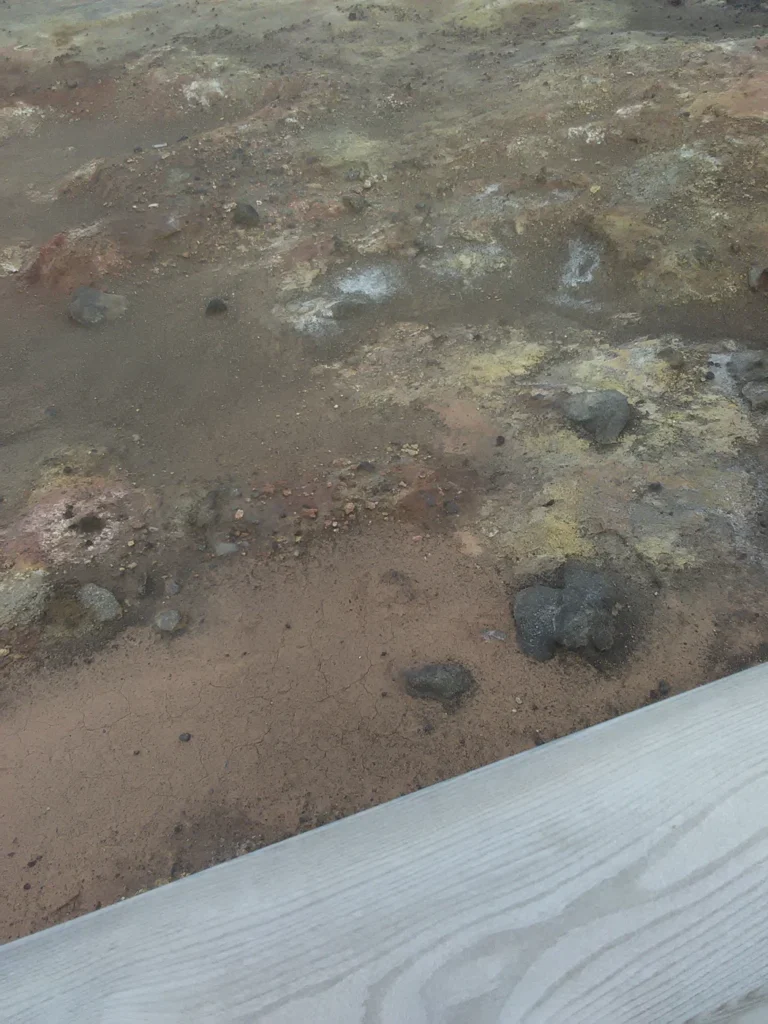
The Reykjanes volcanic system, located in Iceland with an elevation of 140 meters, features crater rows in a rift zone and oceanic crust tectonic setting. Official records from the Smithsonian Global Volcanism Program document a total of 22 confirmed eruptions spanning from prehistoric dates up to 2025 CE. The historical record encompasses activity across multiple centuries, using evidence methods ranging from early tephrochronology and isotopic dating to direct historical observations.
Eruption History and Chronology
The confirmed eruption record for Reykjanes begins with prehistoric activity dated as early as 8000 BCE (with a start year modifier of ‘?') at the Thrainskjöldur activity area. Over millennia, activity has manifested across different areas within the system, including the Sundhnukar and Sundhnúkagígar fissure swarms, Stampar, Karlsgigur, and Reykjaneshryggur.
Determining the scale of these events involves the Volcanic Explosivity Index (VEI), which measures the relative size of explosive volcanic eruptions based on factors such as volume of products and cloud height. Across the record, 19 eruptions include VEI observations, with the largest recorded VEI reaching 4.0 during an eruption at Reykjaneshryggur that started on July 15, 1226 CE, and ended in 1227 CE. Other documented events include non-explosive or effusive activity, such as an eruption at Sundhnukar starting around 400 BCE with a VEI of 2.0, and events assigned a VEI of 0.0, such as the activity starting on July 16, 2025 CE, and ending on August 5, 2025 CE, at the Sundhnúkagígar and Svartsengi fissure swarm.
Distribution of Eruptions by Century
The 22 confirmed eruptions are distributed across various time periods in the official record. Centuries with recorded activity range from deep prehistory into the 21st century CE:
- 80th century BCE: 1 eruption
- 51st century BCE: 1 eruption
- 40th century BCE: 1 eruption
- 38th century BCE: 1 eruption
- 18th century BCE: 1 eruption
- 4th century BCE: 1 eruption
- 2nd century BCE: 1 eruption
- 10th century CE: 1 eruption
- 12th century CE: 1 eruption
- 13th century CE: 7 eruptions
- 16th century CE: 1 eruption
- 18th century CE: 1 eruption
- 19th century CE: 1 eruption
- 21st century CE: 3 eruptions
Evidence and Observation Methods
The scientific understanding of Reykjanes draws on a combination of observation techniques. Older prehistoric events rely on geological and chronological proxies, such as tephrochronology (dating layers of volcanic ash) and isotopic dating (such as uncalibrated 14C methods). As the timeline moves forward into the medieval and modern eras, the record transitions to direct historical observations and reported accounts, culminating in precise modern observation methods for 21st-century events.
Frequently asked questions
How many eruptions have been recorded at Reykjanes?
The Smithsonian Global Volcanism Program records 22 confirmed eruptions for the Reykjanes volcanic system.
When did the earliest recorded eruption occur?
The earliest recorded eruption in the official dataset dates back to 8000 BCE.
What is the largest recorded VEI for Reykjanes?
The largest recorded Volcanic Explosivity Index (VEI) for Reykjanes is 4.0, associated with the eruption at Reykjaneshryggur in 1226–1227 CE.
Image credits
- Hornstrandir1 — Wikimedia Commons source — CC BY-SA 4.0
Sources and further context
Official datasets support the event-specific facts.