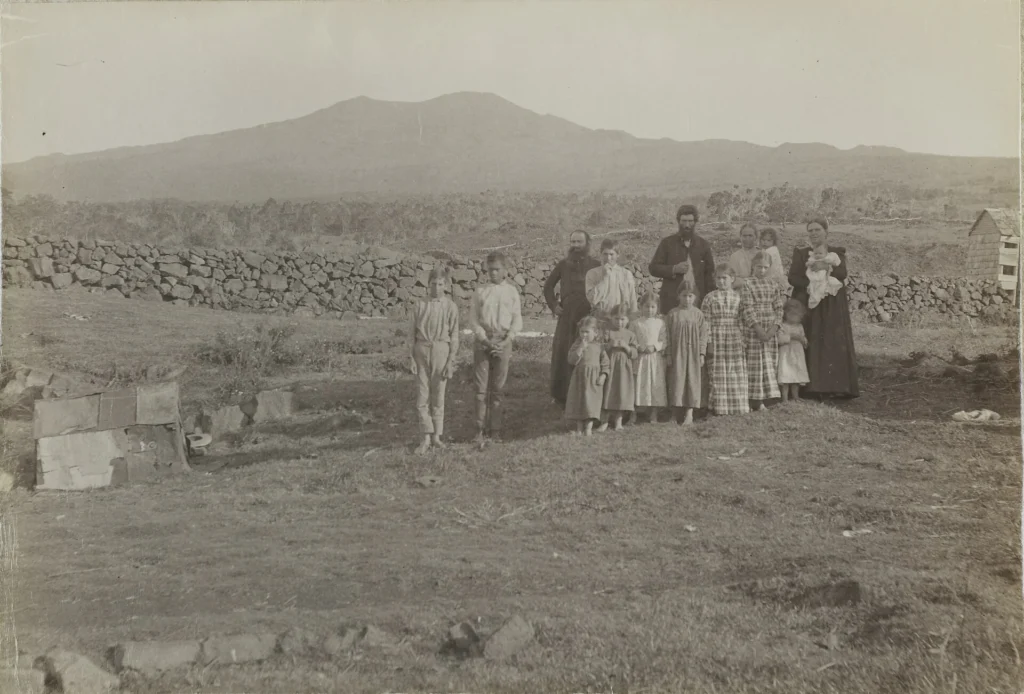
Hualalai is a shield volcano located in the United States, rising to an elevation of 2,523 meters. Situated in an intraplate tectonic setting on oceanic crust less than 15 kilometers thick, the volcano has a recorded history of 22 confirmed eruptions. These events span thousands of years, offering insight into the long-term behavior and eruptive patterns of the volcanic system.
Overview of Eruption History
The official record for Hualalai includes 22 confirmed eruptions cataloged by the Smithsonian Global Volcanism Program. The earliest recorded eruption in the collection dates back to 7540 BCE with an uncalibrated radiocarbon dating method and an estimated start year uncertainty of 200 years. Throughout its timeline, activity has been documented across various zones, including the northwest rift zone, the north rift zone, and the south-southeast rift zone (Waha Pele).
The largest recorded Volcanic Explosivity Index (VEI) for Hualalai in the official data is 2.0, an explosivity rating observed during activity such as the eruption at the Waha Pele area around 1240 CE. Many other entries in the record carry a VEI of 0.0, denoting non-explosive or effusive activity characteristic of shield volcanoes.
Dating Methods and Chronology
Because written historical accounts cover only a fraction of Earth's volcanic history, researchers rely on a mix of isotopic dating and direct observation to reconstruct Hualalai's activity. The chronology incorporates uncalibrated radiocarbon (14C) isotopic evidence for prehistoric events—such as eruptions in 2040 BCE (with a 75-year uncertainty) and 440 BCE (with a 50-year uncertainty)—alongside reported human observations for later events.
The latest recorded eruption in the structured collection began on July 2, 1800, and ended on July 1801-07-02 according to the event profile parameters (with the end date specifically logged as 1801-07-02 for eruption number 10254). The profile lists the last known eruption year as 1801, and the volcano has remained without a confirmed eruption in the centuries since.
Sources and further context
Official datasets support the event-specific facts.