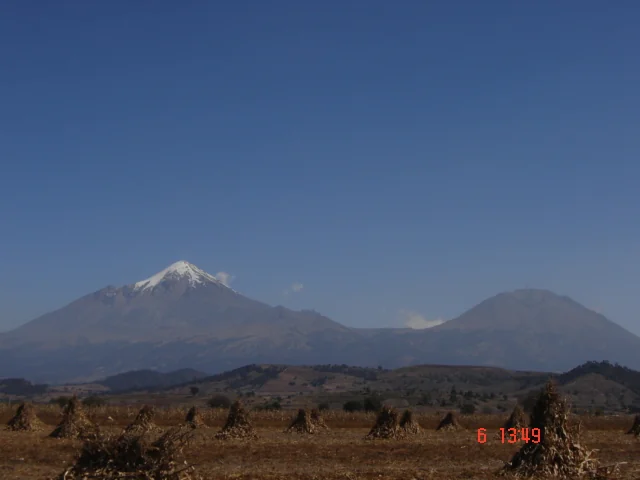
Sierra Negra is a shield volcano located in Ecuador at latitude -0.83 and longitude -91.17, reaching an elevation of 1,124 meters above sea level. Situated in an oceanic crust rift zone setting, Sierra Negra has a documented record of 18 confirmed volcanic eruptions according to the Smithsonian Global Volcanism Program. Its recorded volcanic history ranges from prehistoric isotopic exposure dates to modern direct observations, with the maximum recorded Volcanic Explosivity Index (VEI) reaching 3.0.
Overview of Historical Eruption Record
The historical activity of Sierra Negra spans thousands of years, with the earliest documented eruption dated to approximately 8250 BCE (±1600 years). Across the entire record, 15 eruptions have received an assigned VEI rating. The distribution of confirmed eruptions across geological and recorded history includes:
- 83rd century BCE: 1 eruption
- 13th century BCE: 1 eruption
- 4th century CE: 1 eruption
- 11th century CE: 1 eruption
- 14th century CE: 1 eruption
- 19th century CE: 4 eruptions
- 20th century CE: 7 eruptions
- 21st century CE: 2 eruptions
While the complete official catalog contains 18 events, individual sample records demonstrate how scientific evidence for these eruptions has been gathered across different eras. Prehistoric events, such as the 8250 BCE eruption and an eruption around 1350 CE (±500 years), were determined using cosmic ray exposure isotopic dating methods. Both of these early events are recorded with a VEI of 0.0.
Documented Modern Eruptions
In more recent centuries, observations shifted from isotopic dating to written and instrumental reporting. Historical records from July 2, 1860, document a VEI 2.0 eruption, though historical tracking listed the specific area as uncertain within Isabela Island.
Detailed observational records are available for 21st-century events:
- October 2005 Eruption: Beginning on October 22, 2005, and ending on October 30, 2005, this eruption occurred along the north caldera rim. It achieved a VEI rating of 3.0, representing the maximum recorded explosivity level in Sierra Negra's documented profile.
- June 2018 Eruption: The volcano's latest recorded eruption began on June 26, 2018, and concluded on August 23, 2018. Producing a VEI of 2.0, activity was observed at the summit crater, the north-northwest (NNW) flank, and the Volcán Chico fissure vent.
Eruption Scale and Activity Status
The Volcanic Explosivity Index (VEI) measures the explosive magnitude of an eruption on an open-ended scale. Sierra Negra's recorded events cluster between VEI 0.0 and VEI 3.0, indicating moderate explosive intensity characteristic of oceanic shield volcanoes.
All 18 confirmed eruptions in Sierra Negra's official history are completed events with no currently ongoing eruption reported in the database. Historical timelines provide insight into past eruptive frequency and location but do not serve as direct forecasts for future volcanic behavior.
Frequently asked questions
How many confirmed eruptions are recorded for Sierra Negra?
There are 18 confirmed eruptions recorded for Sierra Negra in the official Smithsonian Global Volcanism Program database.
When was Sierra Negra's most recent confirmed eruption?
Sierra Negra's most recent recorded eruption began on June 26, 2018, and ended on August 23, 2018.
What is the highest VEI recorded for Sierra Negra?
The maximum recorded Volcanic Explosivity Index (VEI) for Sierra Negra is 3.0, observed during events such as the October 2005 eruption.
Where is Sierra Negra located and what type of volcano is it?
Sierra Negra is a shield volcano located in Ecuador at an elevation of 1,124 meters, situated in an oceanic crust rift zone setting.
Image credits
- oswaldo bautista — Wikimedia Commons source — CC BY-SA 3.0
Sources and further context
Official datasets support the event-specific facts.