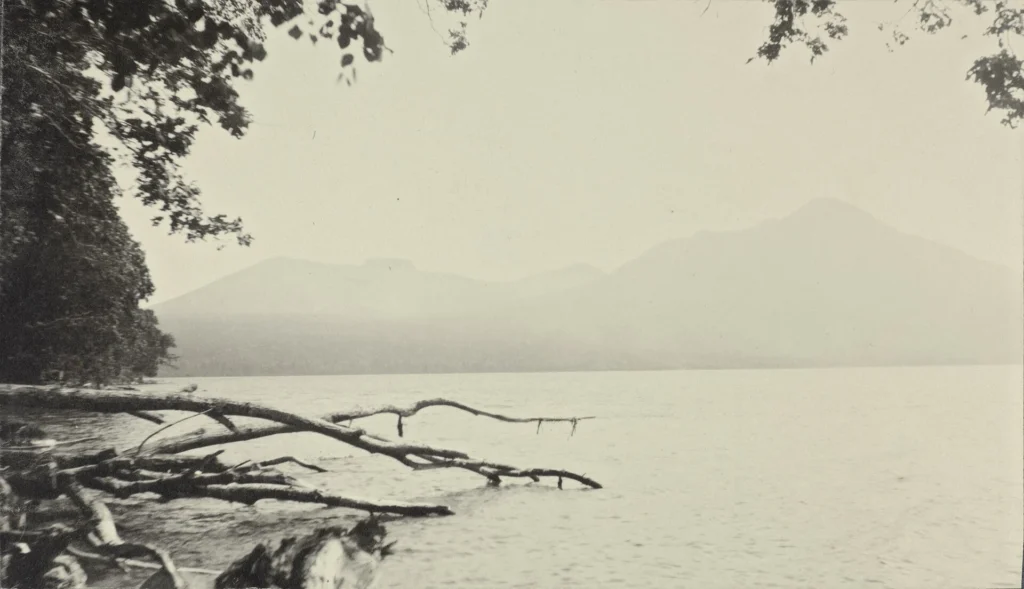
Shikotsu is a caldera volcano located in Japan at latitude 42.688° N and longitude 141.38° E, with a summit elevation of 1,320 meters. Situated in a subduction zone characterized by continental crust thicker than 25 kilometers, the volcanic complex has a documented eruptive record maintained by the Smithsonian Institution's Global Volcanism Program under volcano number 285040.
Chronology of Recorded Eruptions
Official records document 41 confirmed eruptions at Shikotsu. The documented eruptive history extends from an uncalibrated radiocarbon-dated event in approximately 6950 BCE to the most recent confirmed event on February 27, 1981. Over time, the distribution of confirmed events by era and century includes:
- 70th century BCE: 1 eruption
- 6th century BCE: 1 eruption
- 1st century BCE: 2 eruptions
- 15th century CE: 1 eruption
- 16th century CE: 1 eruption
- 17th century CE: 1 eruption
- 18th century CE: 2 eruptions
- 19th century CE: 9 eruptions
- 20th century CE: 23 eruptions
The concentration of events in the 19th and 20th centuries reflects both the volcano's eruptive frequency and the expansion of continuous direct human observation and written reporting in modern times.
Explosive Magnitude and Key Eruptive Events
The scale of explosive activity at Shikotsu is measured using the Volcanic Explosivity Index (VEI), an open-ended scale ranking explosive power based primarily on ejecta volume and plume height. All 41 confirmed eruptions have assigned VEI ratings, with the largest known events reaching a VEI of 5.0.
Documented eruptive activity in the official catalog includes events centered at post-caldera vents such as Tarumai:
| Start Date | End Date | Activity Area | VEI | Evidence Method |
|---|---|---|---|---|
| 6950 BCE (?) | Unspecified | Tarumai | 5.0 | Isotopic: 14C (uncalibrated) |
| August 19, 1739 CE | August 31, 1739 CE | Tarumai | 5.0 | Observations: Reported |
| September 8, 1867 CE | Unspecified | Tarumai | 2.0 | Observations: Reported |
| June 13, 1918 CE | July 31, 1918 CE | Tarumai | 1.0 | Observations: Reported |
| February 27, 1981 CE | February 27, 1981 CE | Tarumai | 1.0 | Observations: Reported |
The August 1739 eruption represents one of the largest historically documented explosive events at the complex, rated at VEI 5.0. Twentieth-century activity was characterized primarily by lower-magnitude events, including the VEI 1.0 eruption on February 27, 1981, which concluded on the same day.
Frequently asked questions
What type of volcano is Shikotsu?
Shikotsu is classified as a caldera volcano with a summit elevation of 1,320 meters.
How many confirmed eruptions have occurred at Shikotsu?
There are 41 confirmed eruptions documented in the official record, spanning from 6950 BCE to 1981 CE.
What was the largest recorded eruption at Shikotsu?
The highest recorded explosive magnitude at Shikotsu reached a Volcanic Explosivity Index (VEI) of 5.0, documented in 6950 BCE and in August 1739 CE.
When did the latest confirmed eruption at Shikotsu occur?
The most recent confirmed eruption recorded for Shikotsu occurred on February 27, 1981.
Sources and further context
Official datasets support the event-specific facts.