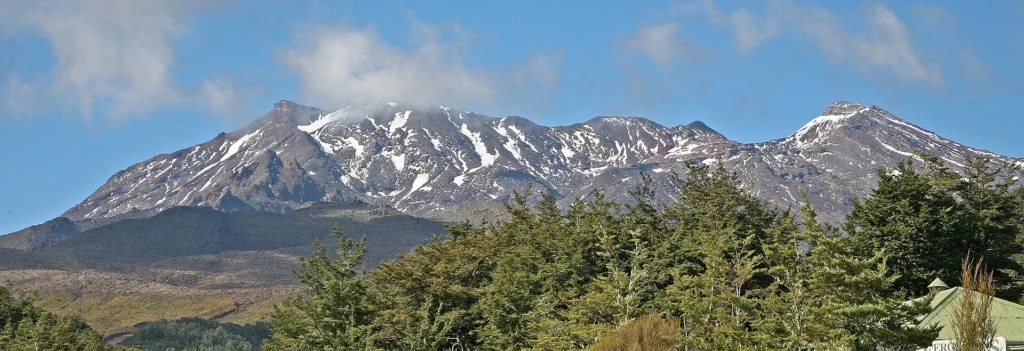
Tongariro is a stratovolcano complex located in New Zealand at an elevation of 1,978 meters, situated within a subduction zone and continental crust setting greater than 25 kilometers thick. According to the Smithsonian Global Volcanism Program, the volcano has a recorded history of 76 confirmed eruptions. These events span a vast timeline, stretching from the earliest recorded event around 9850 BCE up to the latest confirmed activity in 2012.
Overview of Recorded Eruptions
The historical record for Tongariro encompasses 76 confirmed eruptions documented through various evidence methods, ranging from calibrated and uncalibrated radiocarbon dating for ancient events to direct reported observations for more recent centuries. Of these events, 74 include a Volcanic Explosivity Index (VEI) rating, which describes the relative size and explosiveness of volcanic eruptions. The largest recorded VEI in the official record for Tongariro is 5.0, an index level associated with the event dated around 550 BCE with an estimated uncertainty of 200 years at the Ngauruhoe and Red Crater activity area.
Chronological Distribution of Activity
Activity at Tongariro is distributed unevenly across millennia and centuries, reflecting both prehistoric events tracked via isotopic dating and intensely observed periods in recent history. The confirmed eruptions are spread across the following time periods:
- 99th century BCE: 1 event
- 97th century BCE: 1 event
- 95th century BCE: 1 event
- 94th century BCE: 1 event
- 6th century BCE: 1 event
- 15th century CE: 1 event
- 19th century CE: 23 events
- 20th century CE: 45 events
- 21st century CE: 2 events
Prehistoric events rely heavily on isotopic evidence methods, such as carbon-14 dating. For example, the earliest recorded event in the dataset is dated to 9850 BCE with a question mark indicating dating uncertainty. As time progresses into the 19th and 20th centuries, reporting transitions to direct human observations.
Representative Historical Events
The official record captures a wide variety of activity scales and specific crater locations across Tongariro's complex. Notable individual entries in the eruption database include:
- 9850 BCE: An early event identified via calibrated carbon-14 isotopic evidence.
- 550 BCE (approximate): An eruption at Ngauruhoe and Red Crater reaching VEI 5.0, determined via uncalibrated radiocarbon dating with a 200-year uncertainty window.
- 1881-07-06: An observed eruption at Ngauruhoe with a VEI of 2.0.
- 1913-05-16: An observed eruption at Ngauruhoe with a VEI of 2.0.
- 2012-11-21: An observed eruption at the Upper Te Maari Craters with a VEI of 2.0, marking the latest recorded eruption year in the dataset.
Official records list the last known eruption year as 2012, with the latest confirmed eruption concluding on November 21, 2012. None of the historical records indicate a continuing eruption status as of the retrieved source data.
Frequently asked questions
How many eruptions has Tongariro had?
The Smithsonian Global Volcanism Program records 76 confirmed eruptions for Tongariro.
When was Tongariro's earliest recorded eruption?
The earliest recorded eruption in the official dataset is dated around 9850 BCE.
When was Tongariro's most recent eruption?
The latest confirmed eruption occurred on November 21, 2012, at the Upper Te Maari Craters.
What is the largest recorded VEI for Tongariro?
The largest recorded Volcanic Explosivity Index (VEI) for Tongariro is 5.0, associated with an event around 550 BCE.
Image credits
- W. Bulach — Wikimedia Commons source — CC BY-SA 4.0
Sources and further context
Official datasets support the event-specific facts.