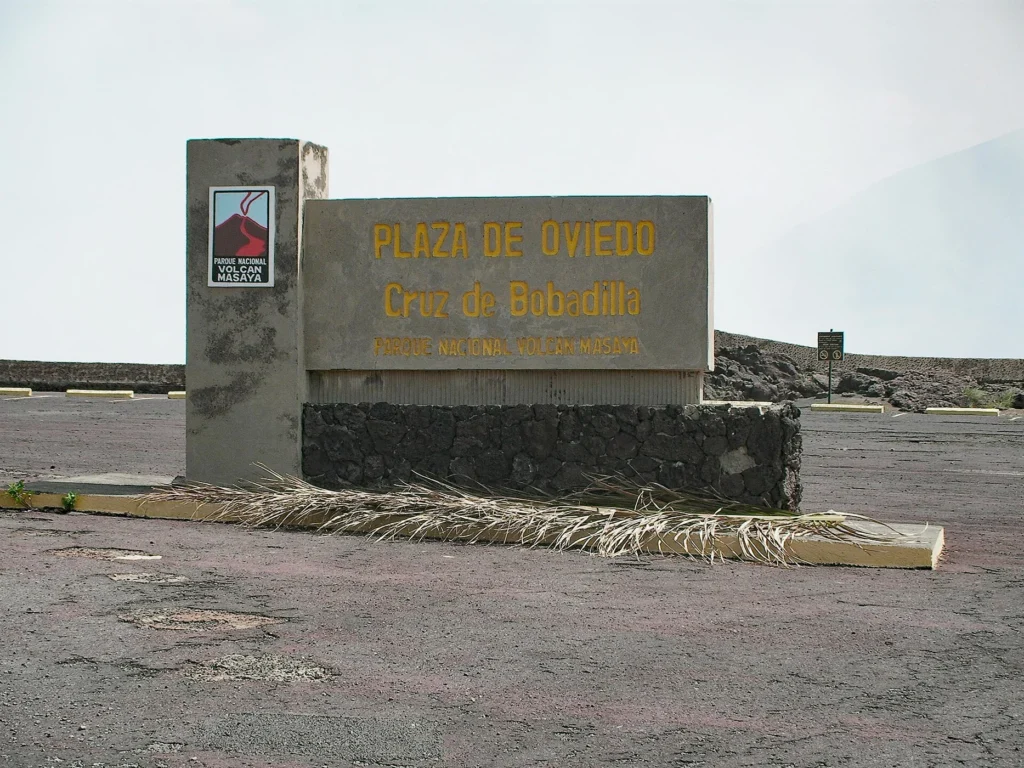
Masaya is an active volcanic caldera located in western Nicaragua. According to data compiled by the Smithsonian Institution's Global Volcanism Program, Masaya has a catalog of 36 confirmed eruptions spanning from prehistoric times into the modern era. The complex is situated in a subduction zone setting along continental crust thicker than 25 kilometers, with a summit elevation of 594 meters above sea level.
Geological Setting and Caldera Structure
Masaya is classified as a caldera, positioned at latitude 11.9844 and longitude -86.1688. The volcano forms part of the Central America volcanic arc, where tectonic subduction drives persistent regional volcanism. The system contains multiple vents and craters within the broader caldera framework, with much of the modern historical activity concentrated around vents such as Santiago.
Overview of Documented Eruptive History
The documented eruptive record of Masaya extends from approximately 4050 BCE to the 21st century. Across the 36 confirmed eruptive episodes cataloged in the official record, activity has ranged from small-to-moderate gas and lava emissions to massive prehistoric explosive events.
The distribution of confirmed eruptions across historical epochs shows a significant clustering of observations during the modern era, reflecting both persistent activity and increased observational reporting:
- 41st century BCE: 1 confirmed eruption
- 2nd century BCE: 1 confirmed eruption
- 2nd century CE: 1 confirmed eruption
- 16th century CE: 3 confirmed eruptions
- 17th century CE: 1 confirmed eruption
- 18th century CE: 1 confirmed eruption
- 19th century CE: 4 confirmed eruptions
- 20th century CE: 17 confirmed eruptions
- 21st century CE: 7 confirmed eruptions
Explosive Magnitude and the VEI Record
The Volcanic Explosivity Index (VEI) measures the relative size and explosiveness of volcanic eruptions on an open-ended, semi-quantitative scale from 0 upward. The largest known event in Masaya's catalog is a prehistoric eruption dated to around 4050 BCE (with age uncertainty), located northwest of the caldera. That event has an assigned VEI of 6.0 based on tephrochronological correlation of deposit layers.
By contrast, historical eruptions throughout the 19th, 20th, and 21st centuries have exhibited much lower explosive indices, predominantly ranging between VEI 1 and VEI 2. These events commonly involve persistent degassing, localized ash and spatter emissions, and active lava lake processes within the caldera's vents.
Selected Eruption Chronology
The table below highlights representative confirmed eruptions from the official record, illustrating the range of dates, activity locations, evidence methods, and explosive magnitudes documented at Masaya.
| Start Date | End Date | Activity Area | Evidence Method | VEI |
|---|---|---|---|---|
| 4050 BCE (?) | — | NW of caldera | Tephrochronology | 6.0 |
| 1853-04-09 | 1853-09-15 | Santiago | Reported Observations | 1.0 |
| 1925-04-16 | — | Santiago | Reported Observations | 2.0 |
| 1997-06-03 | 1997-11-17 | Santiago | Reported Observations | 1.0 |
| 2015-10-03 | 2026-03-31 | Santiago crater | Reported Observations | 1.0 |
Recent Eruptive Episode
A confirmed eruptive period began at Masaya's Santiago crater on October 3, 2015, characterized by low-level explosive activity with an assigned VEI of 1.0. In the official catalog record, this episode is documented with an end date of March 31, 2026, representing the latest confirmed sequence in the database.
Frequently asked questions
What type of volcano is Masaya?
Masaya is classified as a caldera volcano, located in a subduction zone on continental crust in Nicaragua, with a summit elevation of 594 meters.
How many confirmed eruptions are recorded for Masaya?
The Smithsonian Global Volcanism Program catalogs 36 confirmed eruptions for Masaya, spanning from approximately 4050 BCE into the 21st century.
What was the largest known eruption of Masaya?
The largest recorded event at Masaya is a prehistoric eruption dated to approximately 4050 BCE with a Volcanic Explosivity Index (VEI) of 6.0, identified through tephrochronology.
What is the primary vent for historical activity at Masaya?
Much of Masaya's historical and modern activity, including recorded eruptions in the 19th, 20th, and 21st centuries, has centered on the Santiago crater complex within the caldera.
Sources and further context
Official datasets support the event-specific facts.